Photos That Win Cases: What to Document at the Scene and Why
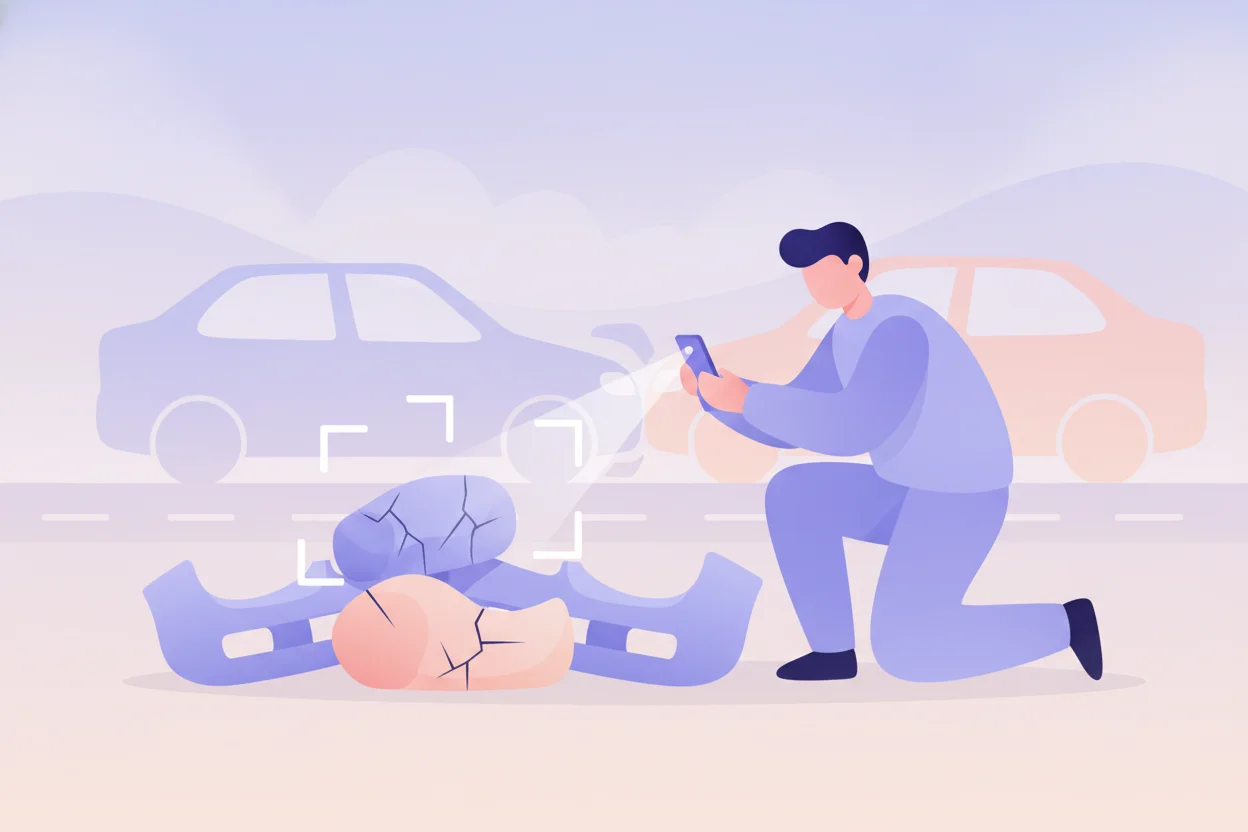
Months after a crash, when an insurer is disputing what happened, memories have faded and the scene is long gone. What remains is the evidence you captured in the first few minutes. Good photos can be the difference between a claim that settles fairly and one that turns into your word against theirs.
The instinct to snap a couple of pictures of the dented bumper is a start, but it is rarely enough. The photos that actually carry weight tell the whole story of the scene, not just the damage. Here is what to capture.
What to capture
- Wide shots of the whole scene. Step back and capture the full picture: both vehicles, their positions, the lanes, and the surroundings before anything is moved.
- Close-ups of all damage. Every vehicle, every angle, from multiple distances. Damage tells investigators how the impact happened.
- License plates and the other driver's documents. Plates, insurance cards, and the driver's license, so the details are never in question.
- The road itself. Skid marks, debris, traffic signals, signs, and any obstructions. These details prove how the crash unfolded.
- Conditions and context. Weather, lighting, and time of day all shape liability. A rainy dusk crash is a different story than a clear noon one.
- Visible injuries. Document any injuries to yourself or passengers, and keep photographing as they develop over the following days.
You only get one chance to photograph the scene as it actually was. An hour later, it is gone for good.
How to do it right
Take far more than you think you need, from many angles and distances. Capture wide context shots and tight detail shots of the same subject. Most phones automatically record the time and location with each photo, which quietly strengthens the record. And do it before vehicles are moved off the road whenever it is safe, because position is often the single most contested fact in a claim.
Why it matters six months later
At the scene, the facts feel obvious and unforgettable. They are neither. By the time a claim is being negotiated, the other driver's story may have shifted, witnesses may be unreachable, and the physical scene is long cleared. Photographs freeze the truth in place. They are the closest thing you have to bringing the adjuster back to the moment it happened.
Imagine being walked through every shot, the moment it happens.
YourLegal.app guides you through documenting the scene and connects you straight to an attorney. Attorneys: see how a branded version puts your firm on your clients' phones before they ever need it.

Brian Galvan
Founder of YourLegal.app and a martech, software, and A.I. solutions designer who has spent his career building technology in the legal industry. See more at About.